


In Summary:
General Alexus Grynkewich’s Theory of Victory is not a new NATO military strategy, but it emphasises NATO’s readiness to fight if attacked
There are, however, important gaps to be filled: from US dependence, to ensuring political cohesion among the members, to military capabilities
For deterrence to be effective, Russia must believe that NATO is ready to respond and fight
NATO and the Theory of Victory
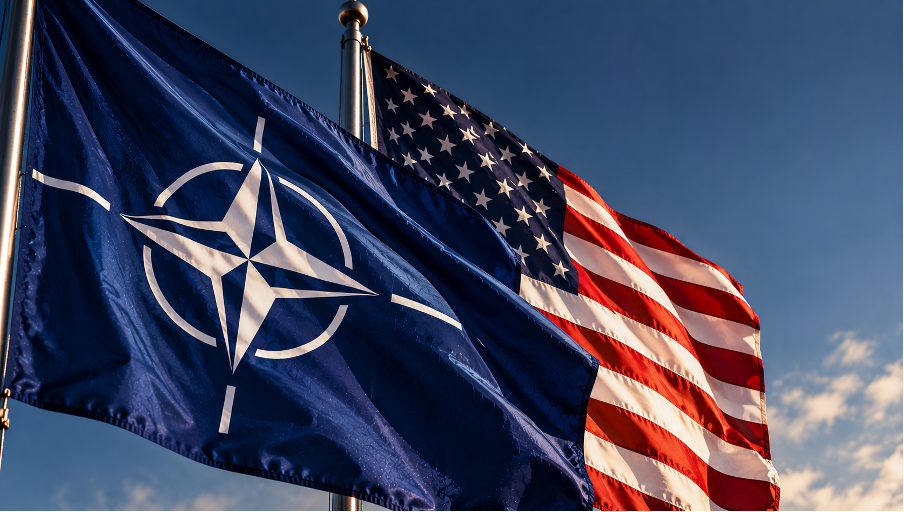
On 12 October 2026, at the Warsaw Security Forum, NATO’s Supreme Allied Commander Europe (SACEUR), a position held by the American General Alexus Grynkewich, outlined how the Alliance plans to respond to a potential Russian attack. His words were clear and straightforward: block, blunt and break, referring to NATO’s aim to block the initial assault, blunt any further offensive and break the military systems sustaining it. Grynkewich described this approach as NATO’s “Theory of Victory”, stressing however that a confrontation is not inevitable, as he stated: “I do not assess that conflict is imminent or inevitable. It isn’t.”
The announcement comes at a moment when European governments are faced with growing concerns over Russian military activity, from suspected sabotage targeting critical infrastructure in the Baltic Sea to drone incursions into NATO airspace. NATO has already spent years strengthening its eastern flank, and its members adopted new regional defence plans in 2023. What does, then, Grynkewich’s theory of victory add? Is it a new NATO strategy, or a label for existing plans? Beyond the question of whether this represents a new strategy lies a more consequential challenge, namely whether NATO can put its intentions into practice. There are many gaps to fill: from military preparedness to political cohesion among the members, to future dependence on the United States.
A New Strategy or a New Message for Russia?
NATO’s Theory of Victory should not be interpreted as a totally new approach to collective defence. After Russia annexed Crimea in 2014, the Alliance started reinforcing its eastern flank. At the Vilnius Summit in 2023, NATO developed and adopted new regional defence plans with the purpose of strengthening its defence of the Allied territory from the outset of a conflict.
For Łukasz Kulesa, Deputy Head of Research at the Polish Institute of International Affairs (PISM), Grynkewich’s speech should be understood in the context of these existing preparations, and not as a newly developed plan. As he states, “I think it’s unfortunate that they call it a theory of victory,” explaining that the expression comes from American military theories and is not traditionally part of NATO’s terminology. Rather than announcing a new plan, Grynkewich is trying to make clear and explicit the logic behind the Alliance’s existing plans. Dr. Ewers-Peters, Assistant Professor at Maastricht University, similarly emphasises the communicative purpose of the expression: “It is more a way of communicating about NATO…it’s one way of communicating to the outside, but also obviously to NATO allies”. Dr. Julian Pawlak, research associate at the German Institute for International and Security Affairs (SWP), shares this assessment: “this represents rather the public expression of existing ideas, notably a commander’s intent, or theory, instead of a public plan.”
Apart from the nature of the terminology, the decision to express NATO’s intentions so explicitly is very significant in itself. By giving the speech specifically in Warsaw, on the eastern flank, Grynkewich was addressing two audiences. For Russia, the message was that an attack would be met with an immediate military response. For NATO’s eastern members, it reassured them that the Alliance is preparing not only to deter aggression, but also to defeat it. As Kulesa puts it, “the message is that we don’t want to fight. But if we fight, we fight to win.” The question, then, is not whether NATO has developed a new strategy, but what implementing it actually implies.
From Forward Presence to Forward Defence
The military logic behind Grynkewich’s Theory of Victory reflects a broader shift in NATO’s approach to defence of its eastern flank. After Russia annexed Crimea in 2014, NATO established a forward presence in countries including Estonia, Latvia, Lithuania and Poland, deploying multinational battlegroups to implement stronger collective defence. The purpose was to ensure that any Russian attack would be met by multiple forces from several NATO members, but these relatively small forces were not meant to be able to face a large-scale invasion independently. NATO has since moved towards the concept of forward defence, which aims to put greater emphasis on stopping an attack from the outset rather than relying on reinforcements to recover territory after an initial attack. As Kulesa explains, “I think what Grynkewich is saying and what NATO is moving to is this forward defence and this idea that we will have enough forces and capabilities to actually engage in a fight and block, that’s the blocking part.” This shift requires more than increasing troops. “They would need to be better connected with the national militaries and they would need to train in a different way,” Kulesa adds.
Grynkewich’s “block, blunt and break” approach builds on this logic. Blocking an attack would prevent Russian forces from achieving their immediate objectives. Blunting a continued offensive could involve expanding NATO’s response to targets supporting the assault, while breaking it would mean disrupting the structures, logistics and other military systems sustaining Russia. However, implementing this approach requires high-level coordination. In the Baltic Sea region, where military reinforcement depends mostly on access to maritime routes and transport infrastructure, the ability to sustain operations could be as important as the initial response. As Dr. Pawlak observes, “for any long-term action in a Baltic region contingency the maritime domain would be crucial for military mobility, logistics, reinforcement”. The Baltic Sea would therefore play a central role in moving troops and equipment, maintaining supply lines and supporting Allied forces on land. Protecting these routes, while coordinating air, maritime and ground operations, will be essential to NATO. The challenge is therefore not limited to stopping Russia: NATO must also ensure that its forces can continue fighting if the confrontation becomes long-term.

The Capabilities Behind the Strategy
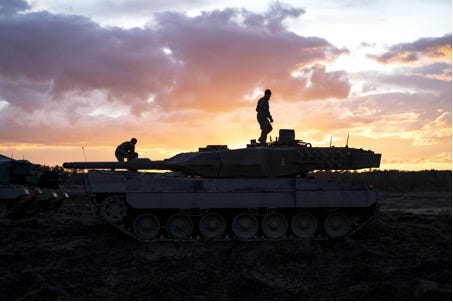
The effectiveness of NATO’s Theory of Victory depends on whether the Alliance has the military capabilities necessary to implement it. Russia’s war in Ukraine has shown the need for high-intensity warfare, from the use of drones and missiles to the importance of maintaining ammunition supplies over prolonged periods. Despite NATO’s military capabilities, capability gaps remain. Dr. Ewers-Peters identifies air defence as a main European vulnerability: “one thing that European states, for example, lack is air defence”. The time required to develop new capabilities is also a challenge, as she argues that “anything in the military defence sector, it takes time to develop and produce”.
As Kulesa explains, “we have these capabilities, but not enough in case of this large-scale attack or a kind of high-intensity war.” Air and missile defence is one of the most pressing concerns. Protecting territory against large numbers of missiles and drones would require NATO to make choices about which military infrastructures to prioritise. Kulesa also expresses the need for greater long-range strike capabilities. Disrupting the forces sustaining an offensive would require NATO to target military infrastructure beyond the immediate battlefield, raising questions about the availability of weapons and the potential for escalation.
A further challenge concerns the ability to sustain military operations. “The third big thing, I think, is the issue of the capability to actually sustain war, because the stockpiles are usually rather small,” Kulesa warned. Even if NATO is successful in responding to an assault, its ability to continue fighting depends on ammunition, replacing equipment and maintaining industrial production. These requirements become particularly important if a confrontation extends beyond the expected duration. The question is therefore not whether NATO could respond effectively to an attack, but whether it could sustain itself for as long as necessary.
NATO’s Dependence on the US
Even if NATO succeeds in strengthening its military capabilities, implementing this Theory of Victory depends on multiple factors. Two challenges arise: NATO’s reliance on the US and the political cohesion among the members. Despite European efforts to assume greater independence about their own defence, the US continues to provide important capabilities that are difficult to replace, especially when it comes to intelligence, surveillance, and long-range strike assets. Kulesa warns that “you might have a situation in which the United States would withdraw forces too fast, and there wouldn’t be a European replacement.” Such a scenario could become problematic for European allies.
NATO and US Priorities
The challenge is not only that Europe needs to replace American capabilities, but that US and European governments have different priorities when it comes to developing them. Dr. Ewers-Peters identifies a tension at the centre of European rearmament: “the problem here is that Americans want Europeans to buy American military capabilities and Europeans want to develop their own because the idea for Europeans is we invest into our own defence industry to make revenues”. The challenge may therefore not be a full American withdrawal from NATO, but a reduction in the forces available.
Political Cohesion
Yet military dependence is only part of the problem. NATO’s plans ultimately require political cohesion, and the willingness of Allied countries to act collectively should not be taken for granted. For Dr. Ewers-Peters, the question extends beyond agreement among NATO governments: “Every single member state needs to be on board with this, which also means support at the domestic level within member states. And this, I think, is where it can lead to problems.” As Kulesa also explains, “you have the best possible military strategy or military approach, but you also need the politicians to actually give you the green light.”
The Risks of Escalation
This becomes particularly important when considering the potential escalation of a confrontation with Russia. While defending Allied territory against an initial attack would fall within NATO’s collective defence, striking military infrastructure deeper inside Russia could become more difficult. The credibility of Grynkewich’s approach therefore lies not only in NATO’s capacity to respond, but also in Russia’s understanding of whether the Alliance would be willing to do so. “The principal challenge remains the Western resolve together with the Russian perception of it,” Dr. Pawlak says. The nuclear aspect further complicates the situation. Strikes against military targets in Russia could cause the risk of escalation, particularly given Russia’s possibility to make use of nuclear weapons.
Conclusion
For deterrence to succeed, Russia must believe that NATO is ready to fight; any hesitation and lack of cohesion among Allies could compromise this message. On paper, the concept is coherent, but today it is not yet credible because of gaps in air defence, stockpiles, dependence on the US and political cohesion; whether it becomes credible will depend on decisions taken in Europe and Washington, especially about defence budgets, military readiness and political commitment in the coming years.